Other People's Kitchens
Does the inside of your kitchen reflect what’s going on inside your head. Plus the alien landscapes of other people’s kitchens.
I spent a fat week visiting old friends in Bristol, Bath, Salisbury and the ‘Five Villages’ in the middle of May, including a three day house-sit for some friends having a mini break in Barcelona. Joyful to catch up with everyone and fascinating navigating other people’s kitchens, an experience I haven’t consciously been aware of in my life to date.
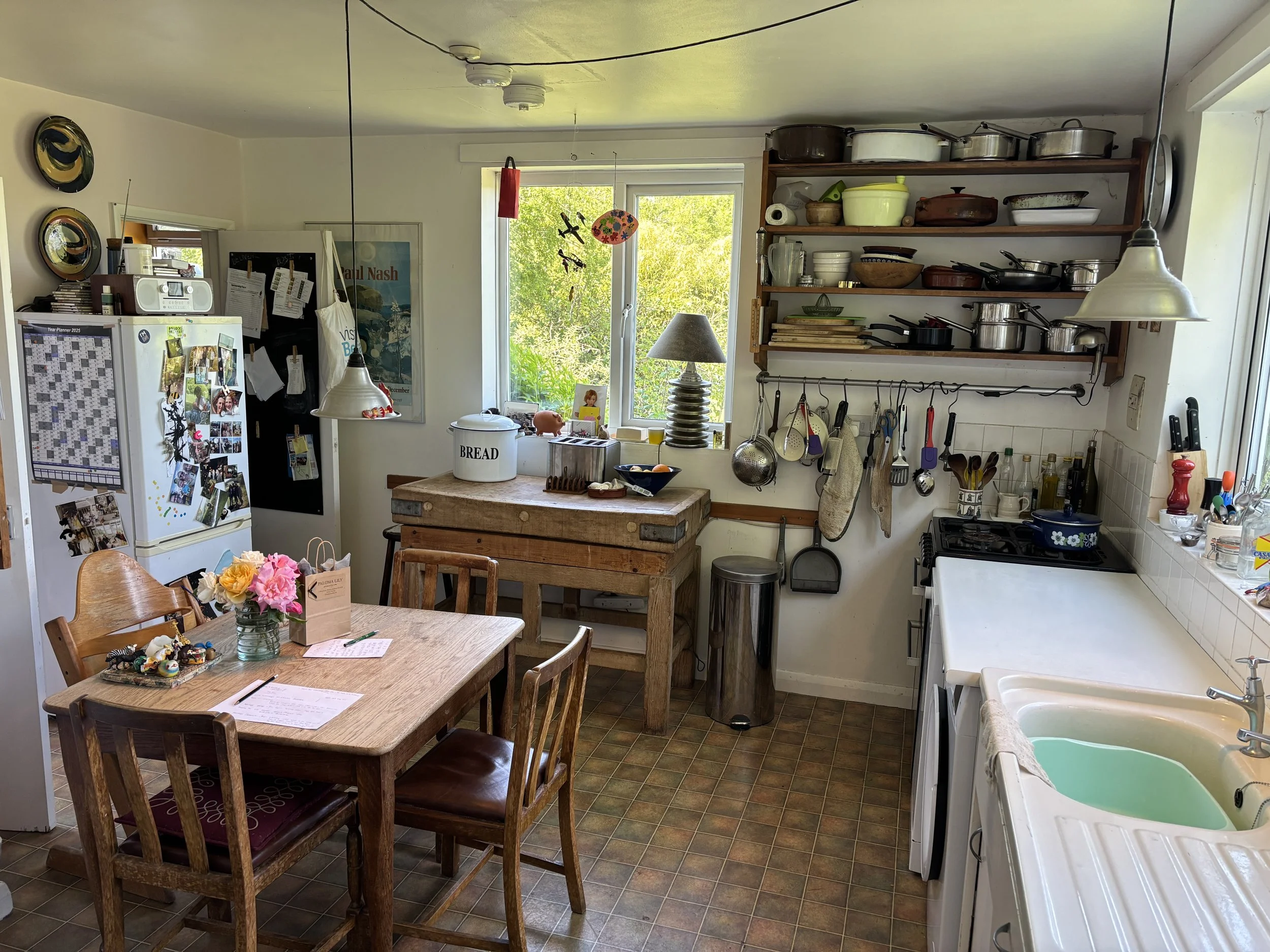
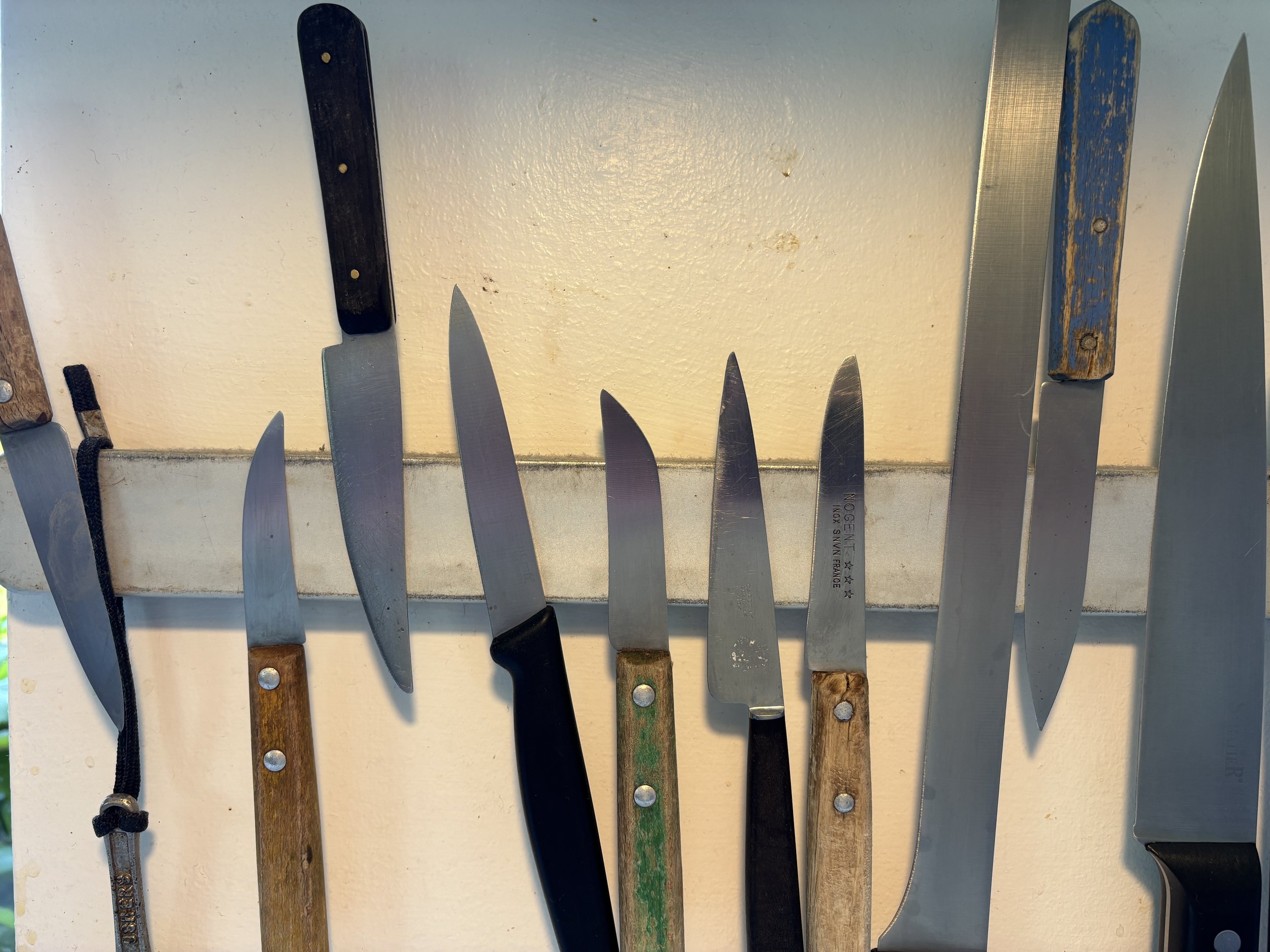
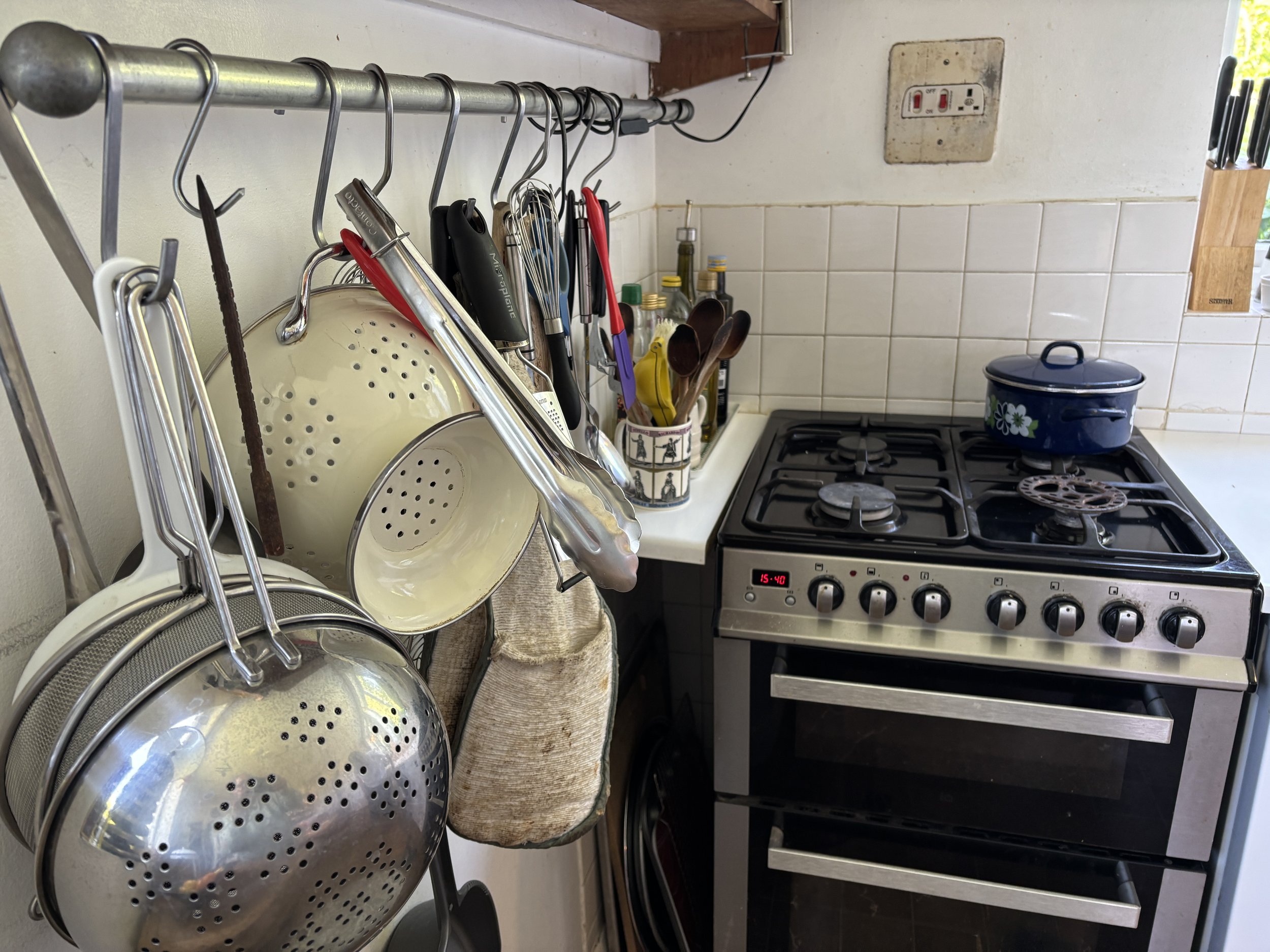
Other people’s kitchens are an alien landscape; they often look a bit like yours until you try to find anything or use anything. The pans are not quite the right size, and the balance of them is somehow wrong, the weight throws you off. Back in the days of ‘Bread and Flowers’, when many of the chefs had the same ‘pastry knife’, I could always tell if I’d picked up the wrong one, just from the feel of it in my hand. And in other people’s kitchens, there’s always a knack to lighting the gas hob, one which evades you for the duration of your, house-sit stay. The recycling system just doesn’t seem to exist, even though you know it does because you’ve had so many discussions on the subject over the years.
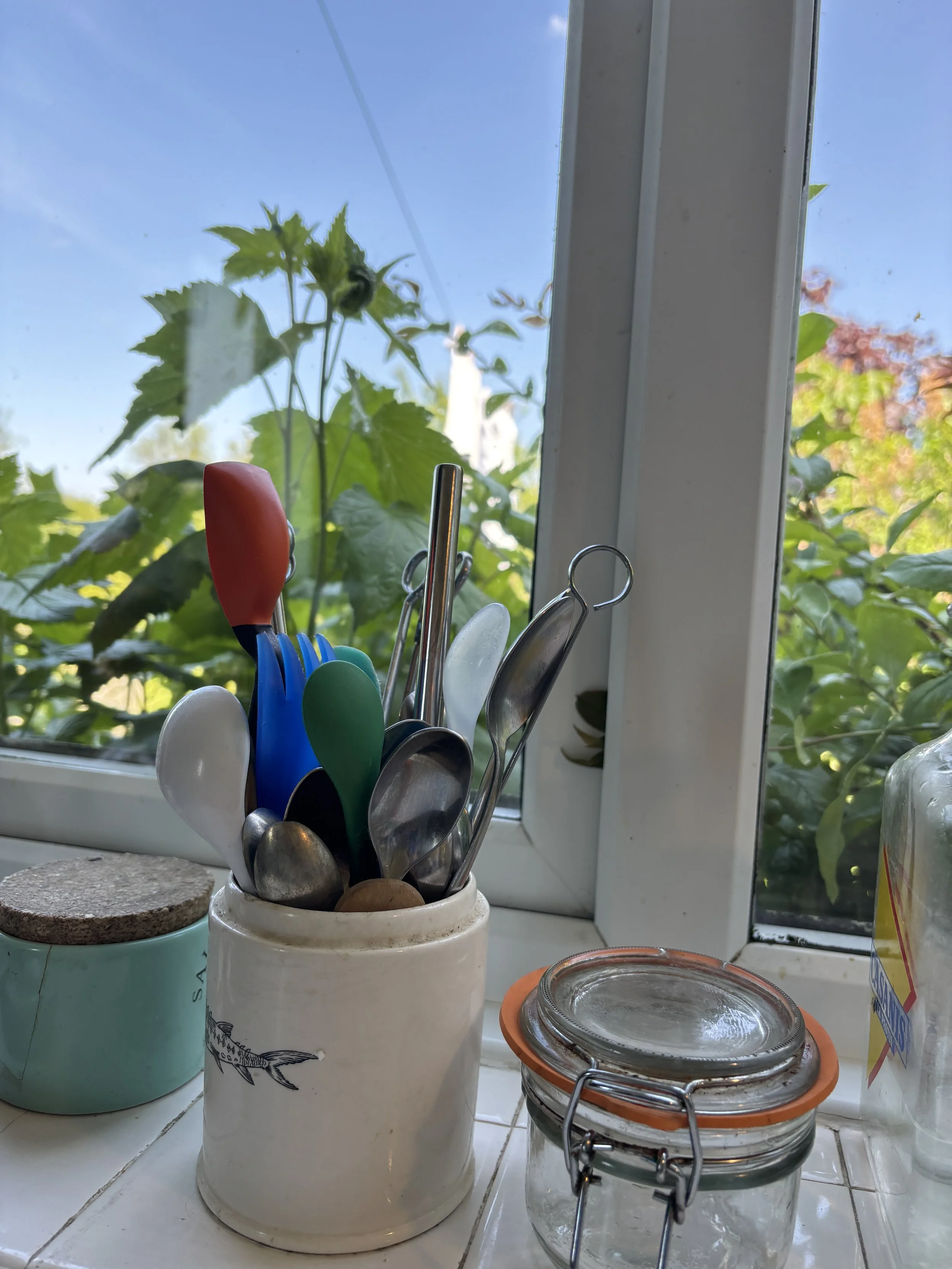
Teaspoons, a common implement, found often, but not always in the cutlery draw, were a particular challenge on my stay in Wilton. Having spent two days scouring every draw in the kitchen, the dishwasher, the outback, the apple store, the office filing cabinet, I eventually found them clustered in a glass tumbler on the windowsill above the sink, where they had been hiding in plain sight for two days. You’re left thinking, wow, if this is what’s going on in their kitchen, what’s going on inside their head.
Overnighting with other friends, I woke up and said to Bee, my wife, ‘I’ll pop down and make a cup of tea’, hopping out of bed early, before anyone else had risen, particularly our hosts, and descending to the kitchen. What could be simpler, kettle, hot water, tea bag, cup, milk. It was an ample kitchen with full on breakfast bar, three dishwashers, fully fitted ovens and hobs, hidden fridges and appliances. Gadgets hanging from every hook. Fabulous art works and a ‘coffee station’ with three machines boasting enough technology to partner NASA on a manned moon landing. Having examined them closely I decided on two teas, even though I’m a coffee addict, there was no way I could even work out how to switch them on.
Fifteen minutes later, I still hadn’t located either a kettle or a tea bag. Surely, they can’t have a ‘tea station’ I mused, until five minutes after that, I found the exact thing through a side door into the butler’s pantry. There were fifteen teas to choose from, maybe more, with a small box labelled ‘decaf builders’, REALLY? What builder worth their salt would ever opt for a decaf, maybe I’m behind the times.
Then there’s the electric hob, which however long you stare at it, doesn’t offer up any clue as to how it actually works. I just wanted to heat up a couple of tablespoons of milk, but I was bewildered when confronted with something resembling a 24-track mixing desk at Abbey Road Studios. A hob, I imagine, designed by a bloke who doesn’t spend much time cooking, or much time in a kitchen for that matter.
Sometimes it’s just the logic that throws you, before a growing sense of frustration creeps over you, tinged with confusion and agitation. When trying to track down a roasting tray or baking sheet for instance, in most kitchen’s you would find them in a draw, or in the larder, the scullery, the aforementioned butler’s pantry, occasionally on a shelf in the laundry room. Unless that is, the kitchen has an Aga, in which case you would find them in the warming oven, alongside the dehydrating eggshells from breakfasts long past, drying out for some mysterious future purpose.
The line from goods in, to goods out is never straight. Just like thoughts, one thought leads to another which pings around your head trying desperately to connect to some trajectory whilst simultaneously forgetting where it came from. In the kitchen, practical often clashes with artistic, where often the most obvious place to site the recycling bin isn’t always the most aesthetic, so quite often it’s in a state of flux, a transitory object, kicked around like thoughts of what you should be doing versus thoughts of what you would prefer to be doing.
Then there’s the terror of actually opening a kitchen cupboard, to expose the horror within. You open, you look in disbelief, but in reality, in the full knowledge that what confronts you is not order, not storage or tranquillity, but hoarding, indecision, worry, and an incapacity to cope with the world. A great friend of mine lives solo, her minute cupboard of a kitchen opens on to a friendly shared stone terrace, where occasionally she may entertain half a dozen friends over a cup of tea.
She has twenty-seven cups and mugs, accumulated from friends, family, exotic trips, cultural ceramic archives. She has too many. She has five crab shells, decorative pieces containing a piece of soap, seventeen scraps of soap, a blown goose egg, seashells and pebbles. A dozen large, artistically recycled placemats, filling a draw for which they are require for duty once every seven years. Her head is crammed full of memories, hoarded over her lifetime, where the hoarding of her lost loves, lives, family fill her mind, the cupboard of her consciousness, the warm linen cupboard of her heroic heart. She has too many wonderful things, and she has my love and for hers, I am eternally grateful.
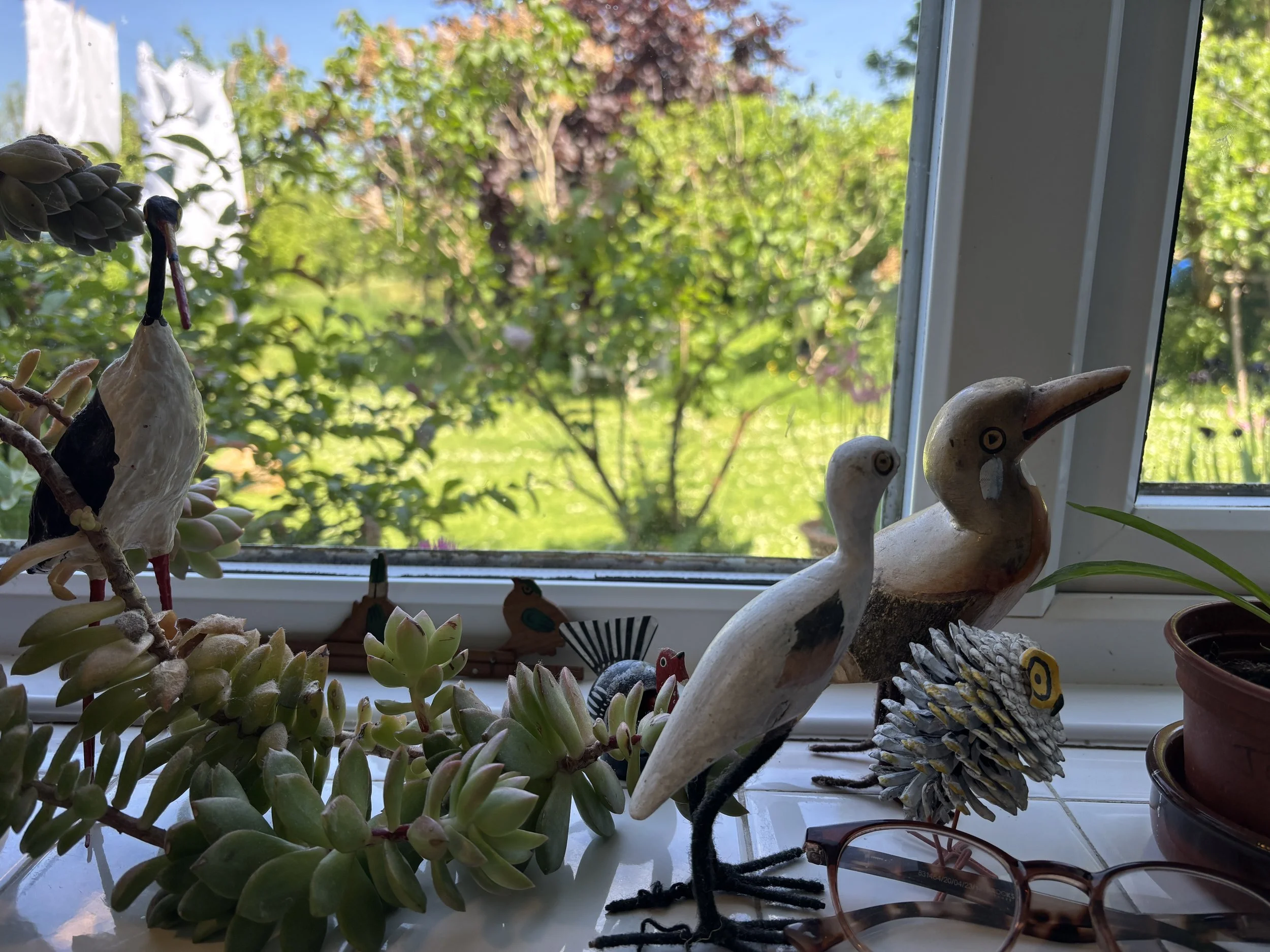
In return for letting me stay in another friend’s house for a few days, I decided to do a bit of a deep cleaning in their kitchen, not that deep, but bits that needed doing, windowsills cluttered with ephemera collected on holidays over the years which never found a home. Little containers of stones, the left-out things that remind us of our children, a weekend in Lisbon, a thankyou card from mum.
The fridge seems to be a place to pin the thoughts inside your head. It could be as simple as a shopping list, a bucket list even, certainly the family calendar, with an inspiring poem from Rudyard Kipling. A couple of memos for what to do next week alongside a magnetically pinned copy of the local News and Notes. You love your friends, and you think you understand them until you’re left alone in their kitchen one bright May morning, and you begin to realise that you never fully understood them and perhaps you never will.