Food for this life and the next
When writing about food, get earthy, nourishing, straight to the stomach, soothing, clutching, something that tells your best friends that you’ve always loved them, always will and will be looking out for them in this and the next life.
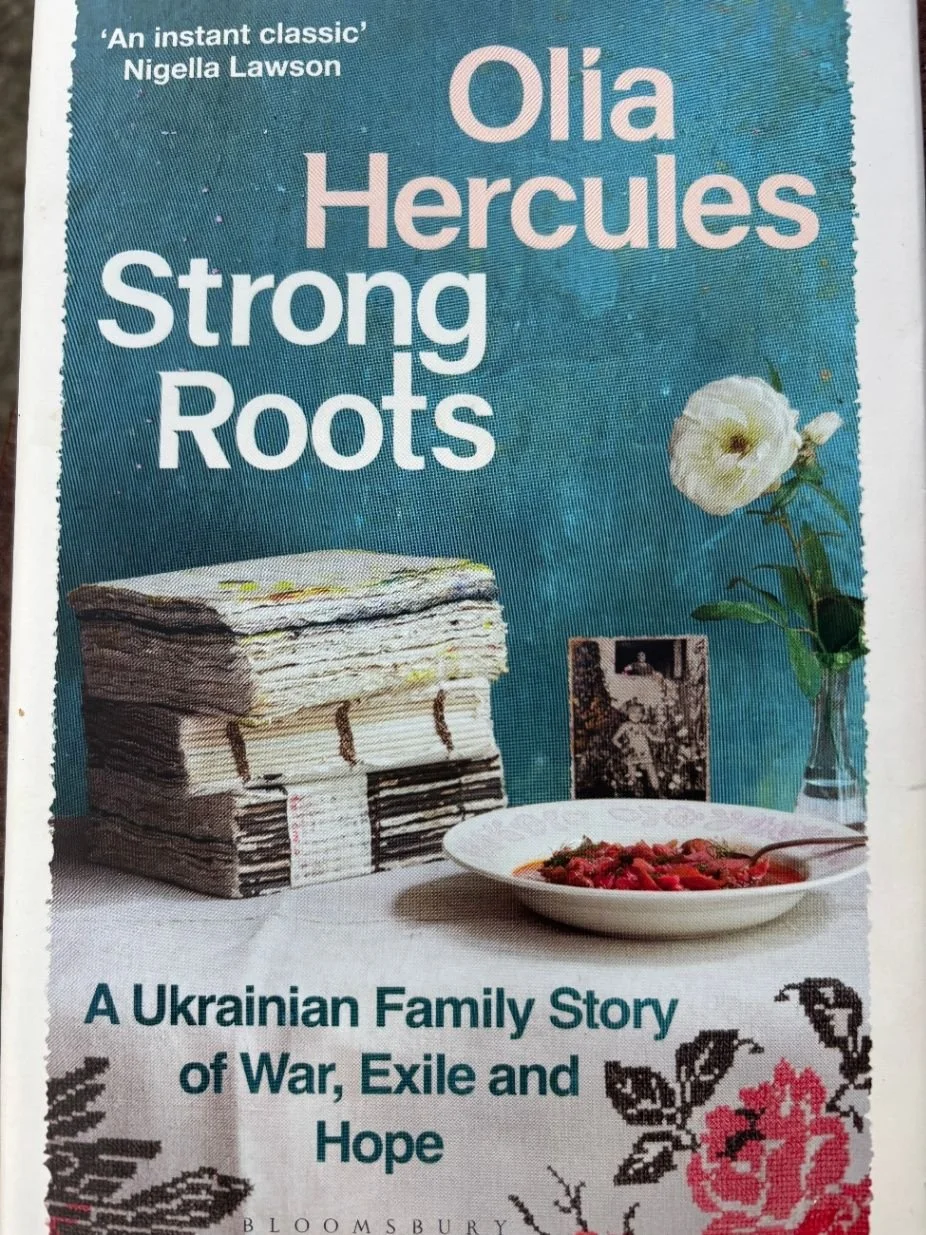
I read Olia Hercules today, ‘Strong Roots’, on the train back to Fishguard from Salisbury, seven hours so enough time. For those of you who don’t know her, she’s a Ukrainian girl, writer, chef, mother, daughter, wife and ancestor to a beautiful land. She painted, in some three hundred pages, a love story, pitted with pain, bereavement, lost hope, hope, sunshine, joyful characters, family members, friends, an architecture with bountiful landscapes locked inside intimate summer kitchens, back gardens and the history of a tortured yet beautiful land.
It was a powerful, traumatising, humbling tale, which having met her and worked alongside her some years ago, I would never have fathomed. You should read it, I think it will settle you, or any part of your troubled mind. In short, it’s about the history of Russia’s hundred years or more, continued invasion of Ukraine and their defiant survival. Olia’s family history, mentioned above is one you should read, and I think compare to your own, if only to make you feel how lucky you and we all are.
I had been visiting Salisbury, Dinton, for the day to pay respects to an old sculptor friend Tim Harrison, one of several over the last twelve months who have died. Friends do, people do, it’s a phenomenon not uncommon in life and my friends seem to be at that point where they are ‘ditching’ to use an old RAF term. There were close to three hundred souls in attendance, so clearly, he was a popular man, and a large part of the congregation were spectres from my forty-five years history in the Chalke Valley, Odstock, Nunton, Martin, Bodenham, and Boveridge. I mention this just in relation to Olia’s history above. Not that mine was in any way so traumatic, but just that one’s personal history, when laid bare is often a procession of friends, queuing up to say hello, and a hundred of them, all at once can feel, at times, traumatic.
Having moved to Pembrokeshire recently, to a welcoming, friendly community which I’ve talked about. I’m somehow feeling estranged from my ‘strong roots’, not only my Wiltshire roots, but the ones grounded briefly in Camberwell, Brixton, Holland Park, Delhi, the Himalayas, Sydney, San Francisco and my original roots in the Northwest of England. Strong cultural roots. I’m probably just having a post-funereal dip in the old serotonin levels. But as Richie Havens sang, ‘Not talking ‘bout the roots in the land, talking ‘bout the roots in the man’
https://www.youtube.com/watch?v=puDtxG9FBLQ
Olia weaves references to food in all parts of her tales of her family’s history and culture. It reminds me to not get too wafty about food, whether cooking it or writing about it. Instead get earthy, nourishing, straight to the stomach, soothing, clutching, something that tells your best friends that you’ve always loved them, always will and will be looking out for them in this and the next life.
Here’s a little food reminiscence which always comforts me. Most people love pasta, students live on it, Italians worship it, athletes thrive on it, so it’s great to be introduced to some new varieties. I cooked my first ‘spag bol’ back in 1974 and since then evolution has been slow, some tagliatelle with a creamy seafood sauce, a little pappardelle with a hare ragu and fusilli with courgette, broccoli, peas, spring onion and a wild garlic pesto.
I picked up a copy of Diana Henry’s ‘Simple’ cookbook recently, first published back in 2016, it’s a great addition to the bookshelf and you can find it easily enough online. There’s a great section dedicated to pasta and so far, I’ve tried two. ‘Orzo with lemon and parsley’, ‘Trofie with courgettes, prawns and chilli.’ Diana describes the first one as like Italian penicillin in a bowl, it’s comforting, great in front of the telly and takes literally 12 minutes to cook from beginning to end. Orzo is a pasta that looks like grains of rice, so it’s a bit like cooking risotto, but quicker, and like a risotto it’s a great vehicle for sitting a piece of baked fish or grilled meat on top of for a filling and fulfilling meal.
You can buy Orzo and Trofie in Waitrose, whilst you’re there you could pick up some Casarecce and Pennette Rigate to play around with. The great thing about a pasta dish is that it’s really easy to put practically anything together to make a half decent sauce. Even I have invented a couple of my own and that’s saying something as I’m a strict recipe man. Of course, for the Italians, pasta is both an art and a science, with each shape of pasta having its own type of sauce and woe betide if you get them mixed up. Here is not the place to go into that kind of detail, but a quick Google tells me there are over 600 varieties.
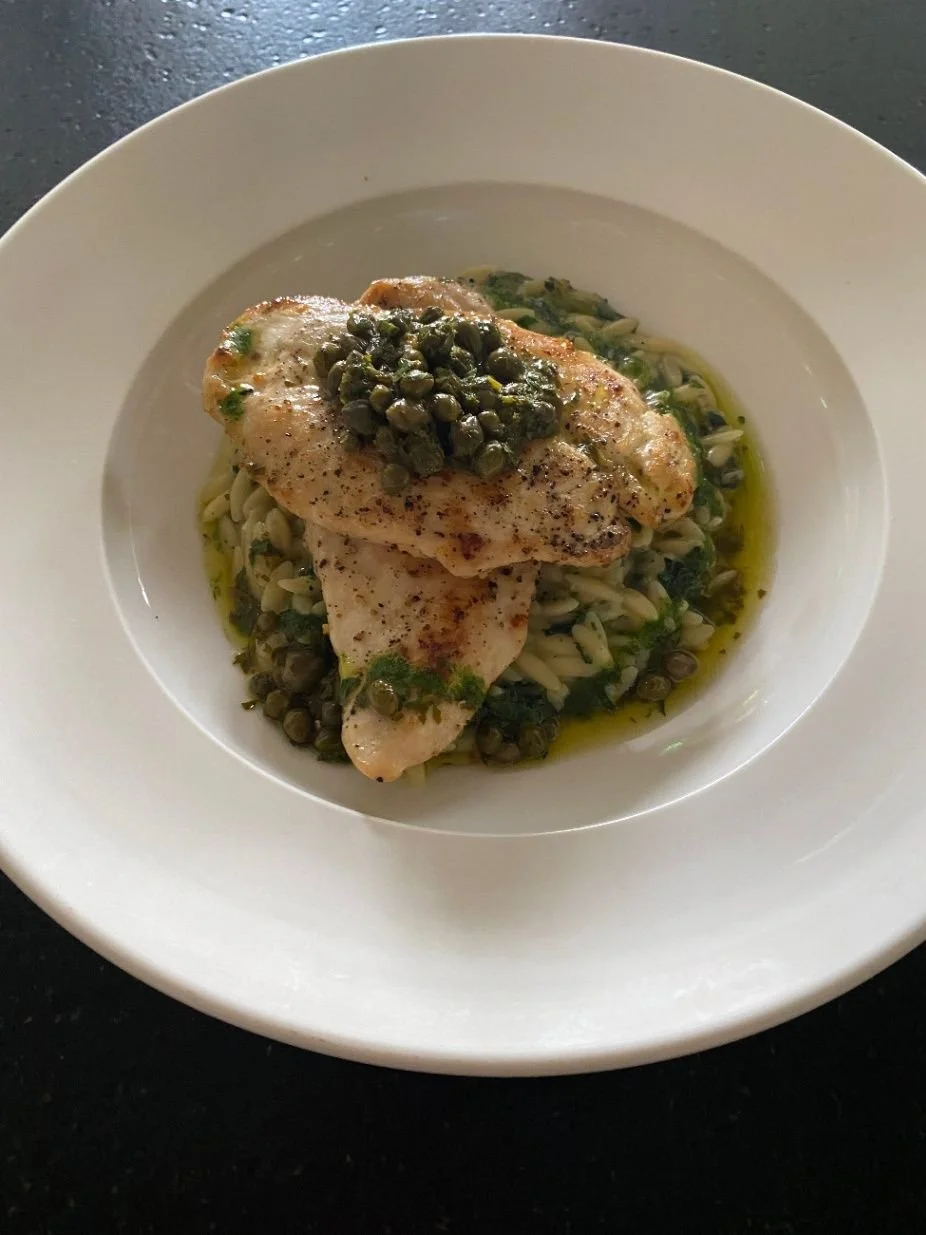
My mother-in-law gave me a wonderful Italian cookbook for Christmas last year, ‘La Cucina’. The pasta section is over two hundred pages long, it’s a 900-page book, traditionally given to brides on their wedding day by their grandmothers. That’s how seriously they take ‘The Kitchen’ down in the land of, well, pasta I suppose. I had the Orzo with Diana’s ‘Chicken piccata’, page 216. Chicken breast sliced horizontally then bashed flat between two bits of clingfilm. Seared in butter in a hot pan then doused with vermouth and basted with lemon juice, capers and chopped parsley, it also takes just a few minutes. Slicing and bashing the chicken is a great dodge, it makes it go a bit further in these budget-conscious times. It's a dish that speaks of comfort, warmth and love, so a great bowl of food to serve up to a hungry throng at a wake. There is a saying, ‘sometimes it’s not about the food.’ What folly, to my mind it’s always about the food.